Curated collection

Humbug: Hoaxes, Impostors and the Art of the Swindle

P. T. Barnum wrote a whole book exposing other people's humbugs. Melville set a novel aboard a Mississippi steamboat full of confidence men. Conan Doyle believed in photographs of fairies. From the alchemist's kitchen to the fake foreign nobleman, this is a collection about being fooled, and enjoying it.

13 free audiobooks, about 102 hours

  1. Listen in MyVoxBox: Humbugs of the World

    Humbugs of the World

    Why it is here The Humbugs of the World (1866): Barnum, the greatest showman, cheerfully exposes quacks, spirit-rappers, bubble companies and adventurers; thirteen hours of gossip.

    P. T. Barnum exposes some of the chief humbugs of the world with his usual entertaining style. He looks at medicine and quacks, ghosts, witchcraft, religious humbugs, money manias, adventurers, personal reminiscences, and much more. (Summary by Barry Eads)

    • 12 h 48 min
    • 51 sections
    • English
    • Published 1866
    • Read by Catharine Eastman, Lee Ann Howlett, Kristine Bekere and 18 others

    Recording from LibriVox page for Humbugs of the World

    Listen in MyVoxBox: Humbugs of the World
  2. Listen in MyVoxBox: Gentle Grafter

    Gentle Grafter

    Why it is here The Gentle Grafter (1908): O. Henry's fourteen stories of Jeff Peters, a con man with scruples; the most purely entertaining entry.

    If Jefferson "Parleyvoo" Pickens had appeared in print just a few years later, he might have been the "Gentle Grifter" instead of the "Gentle Grafter", the name O. Henry picked for him. His situation as an ethical graft artist gives Jeff an extra impediment in pursuing his craft, but he never wanted it to be too easy.

    Read moreShow less

    The result is fourteen delightful tales for us and a number of new partners for him. With those partners (he always has at least one) he works his way through a number of confidence games. Some they win, some they lose, some go into extra innings. They seem never to end just the way you figure they will. In the end he conquers almost all, except for the English language, which often seems to defeat him. (Intro by Leslie Walden)

    • 4 h 37 min
    • 14 sections
    • English
    • Published 1908
    • Read by Leslie Walden

    Recording from LibriVox page for Gentle Grafter

    Listen in MyVoxBox: Gentle Grafter
  3. Listen in MyVoxBox: American Claimant

    American Claimant

    Why it is here The American Claimant (1892): Twain's Colonel Sellers pursues an English earldom; the first novel dictated to a phonograph.

    The American Claimant is an 1892 novel by American humorist and writer Mark Twain. The story focuses on the class differences and expectations of monarchic, hierarchical Britain and the upstart, "all men are created equal" America. Twain wrote the novel with the help of phonographic dictation, the first author (according to Twain himself) to do so.

    Read moreShow less

    This was also (according to Twain) an attempt to write a book without mention of the weather, the first of its kind in fictitious literature. Indeed, all the weather is contained in an appendix, at the back of the book, which the reader is encouraged to turn to from time to time. (Summary by Wikipedia and John Greenman)

    Summary adapted from Wikipedia, used under CC BY-SA 4.0.

    • 6 h 43 min
    • 27 sections
    • English
    • Published 1892
    • Read by John Greenman

    Recording from LibriVox page for American Claimant

    Listen in MyVoxBox: American Claimant
  4. Listen in MyVoxBox: Buried Alive

    Buried Alive

    Why it is here Buried Alive (1908): Bennett's shy painter lets the world believe he is dead and attends his own funeral in Westminster Abbey.

    The hero is Mr Priam Farll, a painter of considerable ability. He is, however, extremely shy – so shy that when his valet, Henry Leek, dies suddenly, the doctor believes the dead man to be Priam Farll and the live man the valet. The artist does not try to disabuse him.

    Read moreShow less

    After the funeral (in Westminster Abbey), Priam Farll marries a widow and lives a happy life until the loss of his wife’s money means he has to take up painting again. A connoisseur of art recognises his style but thinks the paintings are by an imposter. He makes a fortune by buying his works through a small dealer and selling them in America as genuine. Meanwhile Priam Farll refuses through his obstinate shyness to prove his own identity. (Summary by Simon Evers)

    • 5 h 54 min
    • 12 sections
    • English
    • Published 1908
    • Read by Simon Evers

    Recording from LibriVox page for Buried Alive

    Listen in MyVoxBox: Buried Alive
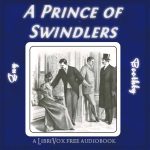
  5. Listen in MyVoxBox: Prince of Swindlers

    Prince of Swindlers

    Why it is here A Prince of Swindlers (1897): Boothby's Simon Carne robs London society during the Jubilee season while dining with its victims.

    The year 18-- was a momentous one in Great Britain. Not only did the nation receive most of the world's royalty for months on end, but the well-to-do gentleman, Simon Carne spent much of the social season in London. On friendly terms with royalty, sponsored into society by Lord Amberly, formerly viceroy of India, Carne's horse won the Derby and his Yacht the Queen's Cup.

    Read moreShow less

    But at the same time, a serious of notorious swindles, thefts and other crimes plagued London and the surrounding environs. The mysterious detective Klimo, did a thriving business by attempting to resolve the crimes. Little did Londoners suspect that Klimo and Carne were one and the same, and the notorious activity remained unsolved until a confession was obtained by Lord Amberly, from the man who became known as A Prince of Swindlers. - Summary by Dr.PGould

    • 6 h 6 min
    • 14 sections
    • English
    • Published 1907
    • Read by Lynda Marie Neilson, Gillian Hendrie and SerFish

    Recording from LibriVox page for Prince of Swindlers

    Listen in MyVoxBox: Prince of Swindlers
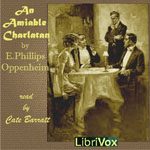
  6. Listen in MyVoxBox: Amiable Charlatan (version 2)

    Amiable Charlatan (version 2)

    Why it is here The Amiable Charlatan (1916): Oppenheim's father-and-daughter con team working Edwardian London; light and quick.

    A lively adventure of a father-daughter con team enjoying themselves in Edwardian London. - Summary by Cate Barratt

    • 6 h 20 min
    • 15 sections
    • English
    • Published 1916
    • Read by Cate Barratt

    Recording from LibriVox page for Amiable Charlatan (version 2)

    Listen in MyVoxBox: Amiable Charlatan (version 2)
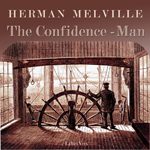
  7. Listen in MyVoxBox: Confidence-Man: His Masquerade

    Confidence-Man: His Masquerade

    Why it is here The Confidence-Man: His Masquerade (1857): Melville's last novel, published on April Fool's Day and set on that day; the deepest book here.

    The Confidence-Man: His Masquerade was the last major novel by Herman Melville, the American writer and author of Moby-Dick. Published on April 1, 1857 (presumably the exact day of the novel's setting), The Confidence-Man was Melville's tenth major work in eleven years.

    Read moreShow less

    The novel portrays a Canterbury Tales-style group of steamboat passengers whose interlocking stories are told as they travel down the Mississippi River toward New Orleans. The novel is written as cultural satire, allegory, and metaphysical treatise, dealing with themes of sincerity, identity, morality, religiosity, economic materialism, irony, and cynicism. Many critics have placed The Confidence-Man alongside Melville's Moby-Dick and "Bartleby the Scrivener" as a precursor to 20th-century literary preoccupations with nihilism, existentialism, and absurdism. (Introduction by Wikipedia)

    Summary adapted from Wikipedia, used under CC BY-SA 4.0.

    • 10 h 56 min
    • 19 sections
    • English
    • Published 1857
    • Read by mb

    Recording from LibriVox page for Confidence-Man: His Masquerade

    Listen in MyVoxBox: Confidence-Man: His Masquerade
  8. Listen in MyVoxBox: Dead Souls

    Dead Souls

    Why it is here Dead Souls (1842): Chichikov buys the names of dead serfs to mortgage them; the founding swindle of Russian fiction.

    Dead Souls (Russian: Мёртвые души) by Nikolai Gogol, Russian writer, was first published in 1842, and is one of the most prominent works of 19th-century Russian literature. Gogol himself saw it as an "epic poem in prose", and within the book as a "novel in verse".

    Read moreShow less

    Despite supposedly completing the trilogy's second part, Gogol destroyed it shortly before his death. Although the novel ends in mid-sentence (like Sterne's Sentimental Journey), it is usually regarded as complete in the extant form.

    In Russia before the emancipation of the serfs in 1861, landowners were entitled to own serfs to farm their land. Serfs were for most purposes considered the property of the landowner, and could be bought, sold, or mortgaged against, as any other chattel. To count serfs (and people in general), the measure word "soul" was used: e.g., "six souls of serfs". The plot of the novel relies on "dead souls" (i.e., "dead serfs") which are still accounted for in property registers. On another level, the title refers to the "dead souls" of Gogol's characters, all of which visualise different aspects of poshlost (an untranslatable Russian word which is perhaps best rendered as "self-satisfied inferiority", moral and spiritual, with overtones of middle-class pretentiousness, fake significance, and philistinism). (Summary from Wikipedia)

    Summary adapted from Wikipedia, used under CC BY-SA 4.0.

    • 14 h 44 min
    • 27 sections
    • English
    • Published 1887
    • Read by Gesine, David Barnes, hefyd and 12 others

    Recording from LibriVox page for Dead Souls

    Listen in MyVoxBox: Dead Souls
  9. Listen in MyVoxBox: Alchemist

    Alchemist

    Why it is here The Alchemist (1610): Jonson's three con artists run a fake laboratory in a plague-emptied house; three hours of Jacobean comedy.

    An outbreak of plague in London forces a gentleman, Lovewit, to flee temporarily to the country, leaving his house under the sole charge of his butler, Jeremy. Jeremy uses the opportunity given to him to use the house as the headquarters for fraudulent acts.

    Read moreShow less

    He transforms himself into 'Captain Face', and enlists the aid of Subtle, a fellow conman and Dol Common, a prostitute. In The Alchemist, Jonson unashamedly satirizes the follies, vanities and vices of mankind, most notably greed-induced credulity. People of all social classes are subject to Jonson's ruthless, satirical wit. He mocks human weakness and gullibility to advertising and to "miracle cures" with the character of Sir Epicure Mammon, who dreams of drinking the elixir of youth and enjoying fantastic sexual conquests. The Alchemist focuses on what happens when one human being seeks advantage over another. In a big city like London, this process of advantage-seeking is rife. The trio of con-artists - Subtle, Face and Dol - are self-deluding small-timers, ultimately undone by the same human weaknesses they exploit in their victims. (Summary by Wikipedia)

    Cast: Subtle, First Neighbor: Elizabeth Klett Face: ToddHW Dol Common: Arielle Lipshaw Dapper, Second Officer: Nathanial W.C. Higgins Drugger, Third Neighbor: Thomas Leigh Moore Lovewit: Kevin Johnson Sir Epicure Mammon: Algy Pug Pertinax Surly, Fifth Neighbor, First Officer: Alan Mapstone Tribulation Wholesome: TriciaG Ananias: Martin Geeson Kastril: David Nicol Dame Pliant: Amy Gramour Fourth Neighbor: Charlotte Duckett Narrator: Kristingj

    Summary adapted from Wikipedia, used under CC BY-SA 4.0.

    • 3 h 7 min
    • 26 sections
    • English
    • Published 1610
    • Read by Elizabeth Klett, David Nicol, TriciaG and 11 others

    Recording from LibriVox page for Alchemist

    Listen in MyVoxBox: Alchemist
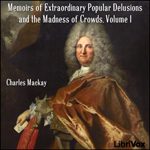
  10. Listen in MyVoxBox: Memoirs of Extraordinary Popular Delusions and the Madness of Crowds, Volume 1

    Memoirs of Extraordinary Popular Delusions and the Madness of Crowds, Volume 1

    Why it is here Extraordinary Popular Delusions and the Madness of Crowds, Vol. 1 (1841): Mackay on tulip mania, the South Sea Bubble and alchemy; still quoted by economists.

    The book chronicles and vilifies its targets in three parts: "National Delusions", "Peculiar Follies", and "Philosophical Delusions".

    The subjects of Mackay's debunking include alchemy, beards (influence of politics and religion on), witch-hunts, crusades and duels. Present day writers on economics, such as Andrew Tobias, laud the three chapters on economic bubbles. (summary from Wikipedia)

    Read moreShow less

    Link to Volume 2

    Summary adapted from Wikipedia, used under CC BY-SA 4.0.

    • 14 h 19 min
    • 29 sections
    • English
    • Published 1852
    • Read by Daniele, J. M. Smallheer, hefyd and 10 others

    Recording from LibriVox page for Memoirs of Extraordinary Popular Delusions and the Madness of Crowds, Volume 1

    Listen in MyVoxBox: Memoirs of Extraordinary Popular Delusions and the Madness of Crowds, Volume 1
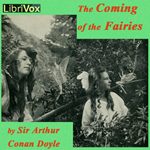
  11. Listen in MyVoxBox: Coming of the Fairies

    Coming of the Fairies

    Why it is here The Coming of the Fairies (1922): Conan Doyle defends the Cottingley fairy photographs as genuine; the hoax from the victim's side.

    After a number of deaths in his close family, Sir Arthur Conan Doyle turned to spiritualism in hope of finding proof of the afterlife. Being open in this way, he wanted to believe that spirits and other supernatural being including fairies were real.

    Read moreShow less

    Because of this he believed the photographs of fairies taken by the Cottingley girls were proof of the existence of such beings. In this book he presents his stance on the issue. Eventually it was proven that the photographs were indeed a hoax. (Summary by Amy Gramour)

    • 3 h 35 min
    • 12 sections
    • English
    • Published 1921
    • Read by Amy Gramour, A. J. Carroll, Novella Serena and 3 others

    Recording from LibriVox page for Coming of the Fairies

    Listen in MyVoxBox: Coming of the Fairies
  12. Listen in MyVoxBox: Frauds, Forgeries, and Fake News Collection

    Frauds, Forgeries, and Fake News Collection

    Why it is here Frauds, Forgeries, and Fake News Collection: short readings of real forged documents, from the Donation of Constantine to the Awful Disclosures of Maria Monk.

    This collection showcases fabricated documents and stories throughout history, and the diversity of purposes and contexts they were deployed in.

    The "Awful Disclosures of the Hotel Dieu Nunnery of Montreal" is a fabricated anti-Catholic eye-witness account, published in 1836 and purporting to reveal the horrors of life in a convent.

    Read moreShow less

    The Donation of Constantine is a forged imperial decree, supposedly enacting a perpetual transfer of authority over the western part of the Roman Empire from the emperor to the Pope.

    George Psalmanazar, who passed himself off as a native of Formosa (Taiwan), wrote a fanciful book about the island, which made a splash in 18th-century London.

    The Great Moon Hoax was a series of fantastical descriptions of the moon, published in the 1830s by the New York newspaper The Sun, and falsely attributed to the famous astronomer Sir John Herschel.

    Bram Stoker tells the legend of Sebastian of Portugal, the "Hidden King", and the story of Franz Mesmer, the purveyor of "animal magnetism" from whose name the word "mesmerize" is derived.

    "An Architectural Monograph on a New England Village" is a painstakingly documented and illustrated description of a village that never existed.

    James Macpherson presented the Poems of Ossian as a traditional epic cycle translated from Scottish Gaelic, but modern scholars believe that he largely wrote the poems himself.

    E. G. Redmond tells of a hoax involving postage stamps, the first of which was conceived by a stamp collector in Germany.

    "Sketch of the Mosquito Shore" was a glowing but false account of the Central American coast, in which one could buy land from the author.

    • 3 h 40 min
    • 10 sections
    • English
    • Read by TriciaG, Craig Campbell, Greg Giordano and 5 others

    Recording from LibriVox page for Frauds, Forgeries, and Fake News Collection

    Listen in MyVoxBox: Frauds, Forgeries, and Fake News Collection
  13. Listen in MyVoxBox: Pathological Lying, Accusation, and Swindling – A Study in Forensic Psychology

    Pathological Lying, Accusation, and Swindling – A Study in Forensic Psychology

    Why it is here Pathological Lying, Accusation, and Swindling (1915): the Healys' case studies in forensic psychology, interesting partly for its own dated assumptions.

    This work describes and analyzes several cases of pathological behavior. The interest comes not only from the cases themselves, but also from the of-its-time analysis which is mired in what we now know to be wrong thinking about mental illness, sexuality, gender, and race. - written by Mary Schneider

    • 9 h 31 min
    • 6 sections
    • English
    • Published 1915
    • Read by Mary Schneider

    Recording from LibriVox page for Pathological Lying, Accusation, and Swindling – A Study in Forensic Psychology

    Listen in MyVoxBox: Pathological Lying, Accusation, and Swindling – A Study in Forensic Psychology