Curated collection

From Clotel to Passing: Black American Writing, 1853-1929

From 1853 to 1929, Black American novelists, poets and essayists wrote through slavery, Reconstruction, Jim Crow and the Harlem Renaissance. Start with Nella Larsen's Passing (1929), then discover earlier landmarks and lesser-known voices. Some works portray racist violence or retain period language.

20 free audiobooks, about 114 hours

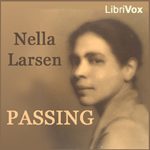
  1. Listen in MyVoxBox: Passing

    Passing

    Why it is here Passing (1929): a short, sharp novel about two mixed-race women and the cost of being taken for white; the most approachable entry point.

    Nella Larsen, a novelist of the Harlem Renaissance, wrote two brilliant novels that interrogated issues of gender and race. In Passing, her second novel published in 1929, she examines the troubled friendship between two mixed-race women who can pass as white.

    Read moreShow less

    One, Irene Redfield, marries a black man and lives in Harlem, while the other, Clare Kendry, marries a bigoted white man. Clare re-enters Irene's life after an absence of many years, and stirs up painful questions about identity. (Introduction by Elizabeth Klett)

    • 3 h 30 min
    • 12 sections
    • English
    • Published 1929
    • Read by Elizabeth Klett

    Recording from LibriVox page for Passing
    Listen in MyVoxBox: Passing
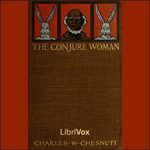
  2. Listen in MyVoxBox: Conjure Woman

    Conjure Woman

    Why it is here The Conjure Woman (1899): seven frame-tales told in dialect by Uncle Julius, which quietly refuse the plantation nostalgia they imitate.

    Published in 1899 by Houghton Mifflin, Chesnutt's first book, The Conjure Woman, was a collection of seven short stories, all set in "Patesville" (Fayetteville), North Carolina. While drawing from local color traditions and relying on dialect, Chesnutt's tales of conjuring, a form of magic rooted in African hoodoo, refused to romanticize slave life or the "Old South."

    Read moreShow less

    Though necessarily informed by Joel Chandler Harris's popular Uncle Remus stories and Thomas Nelson Page's plantation fiction, The Conjure Woman consciously moved away from these models, instead offering an almost biting examination of pre- and post-Civil War race relations.

    These seven short stories use a frame narrator, John, a white carpetbagger who has moved south to protect his wife Annie's failing health and to begin cultivating a grape vineyard. Enamored by remnants of the plantation world, John portrays the South in largely idealistic terms. Yet Uncle Julius McAdoo, the ex-slave and "trickster" figure extraordinaire who narrates the internal story lines, presents a remarkably different view of Southern life. His accounts include Aun' Peggy's conjure spells in "Mars Jeems's Nightmare," "Po' Sandy," "Sis' Becky's Pickaninny," and "Hot Foot Hannibal" as well as those of free black conjure men in "The Conjurer's Revenge" and "The Gray Wolf's Ha'nt." These conjure tales reveal moments of active black resistance to white oppression in addition to calculated (and even self-motivated) plots of revenge. (Introduction provided by Documenting the American South)

    • 3 h 39 min
    • 7 sections
    • English
    • Published 1899
    • Read by James K. White

    Recording from LibriVox page for Conjure Woman

    Listen in MyVoxBox: Conjure Woman
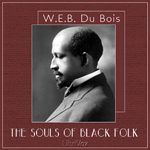
  3. Listen in MyVoxBox: Souls of Black Folk

    Souls of Black Folk

    Why it is here The Souls of Black Folk (1903): Du Bois's essays introduced 'double consciousness' and the colour line; the intellectual spine of the collection.

    The Souls of Black Folk is a well-known work of African-American literature by activist W.E.B. Du Bois. The book, published in 1903, contains several essays on race, some of which had been previously published in Atlantic Monthly magazine. Du Bois drew from his own experiences to develop this groundbreaking work on being African-American in American society.

    Read moreShow less

    Outside of its notable place in African-American history, The Souls of Black Folk also holds an important place in social science as one of the first works to deal with sociology. (Summary from Wikipedia)

    Summary adapted from Wikipedia, used under CC BY-SA 4.0.

    • 7 h 59 min
    • 18 sections
    • English
    • Published 1903
    • Read by toriasuncle

    Recording from LibriVox page for Souls of Black Folk

    Listen in MyVoxBox: Souls of Black Folk
  4. Listen in MyVoxBox: Autobiography of an Ex-Colored Man

    Autobiography of an Ex-Colored Man

    Why it is here The Autobiography of an Ex-Colored Man (1912): Johnson's anonymously published novel of a man who chooses to pass, the direct ancestor of Larsen's books.

    Johnson's only novel, The Autobiography of an Ex-Colored Man, was originally published anonymously in 1912. It is a fictional novel written as a memoir of an unnamed biracial narrator who grew up in the South during the Reconstruction and post-Reconstruction eras.

    Read moreShow less

    It is a story in which the narrator relates how as a young boy he initially assumed that he was white, and how his notions of racial identity were suddenly turned upside down one day—how from that moment on he was inclined to view himself and the world about him from the perspective of blackness. The novel received very little notoriety until Johnson republished it in 1927, this time taking full credit as its author. - Summary by James K. White

    • 5 h 5 min
    • 11 sections
    • English
    • Published 1912
    • Read by James K. White

    Recording from LibriVox page for Autobiography of an Ex-Colored Man

    Listen in MyVoxBox: Autobiography of an Ex-Colored Man
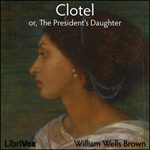
  5. Listen in MyVoxBox: Clotel, or, The President's Daughter

    Clotel, or, The President's Daughter

    Why it is here Clotel; or, The President's Daughter (1853): generally counted the first African-American novel, written by a fugitive from slavery and published in London.

    Clotel; or, The President's Daughter is a novel by William Wells Brown (1814-84), a fugitive from slavery and abolitionist and was published in London, England in December 1853. It is often considered the first African-American novel.

    Read moreShow less

    This novel focuses on the difficult lives of mulattoes in America and the "degraded and immoral condition of the relation of master and slave in the USA" (Brown). It is about the tragic lives of Currer, Althesea, and Clotel. In the novel, Currer is the former mulatto mistress of President Thomas Jefferson who together have two daughters, Althesea and Clotel. Because she was beautiful and the mistress of Jefferson, Currer and her daughters lived a confortable life, this changed when her master passes away. In the end, Currer and Althesea are auctioned to the notorious slave trader, Dick Walker. Clotel is bought by her lover Horatio Green. The separation of these three women is just the beginning of the injustices they face.

    It gained notoriety amid the unconfirmed rumors regarding Thomas Jefferson and Sally Hemmings. Brown was still considered someone else's legal property within the borders of the United States at the time of its publication. It is considered to be the first novel written by an African American.

    Brown used the injustices of slavery to demonstrate the destructive effects it had on the African American family, most significantly the so-called tragic mulatto. Brown had escaped from slavery in Kentucky while still in his youth, and became active on the anti-slavery circuit.

    (Summary from Wikipedia)

    Summary adapted from Wikipedia, used under CC BY-SA 4.0.

    • 5 h 31 min
    • 29 sections
    • English
    • Published 1853
    • Read by Betsie Bush, Andrew Symons, Amy Gramour and 3 others

    Recording from LibriVox page for Clotel, or, The President's Daughter

    Listen in MyVoxBox: Clotel, or, The President's Daughter
  6. Listen in MyVoxBox: Iola Leroy

    Iola Leroy

    Why it is here Iola Leroy (1892): Harper's novel of a woman sold into slavery after her white upbringing is exposed; one of the earliest novels by a Black woman.

    This is the story of Iola Leroy, a free-born, mixed-race woman who passed as white. Her true racial identity eventually discovered, she was kidnapped and sold into slavery. Later freed by the Union Army, she journeyed to find others of her family who had been disunited from each other and strewn across the south by the forces of slavery.

    Read moreShow less

    In the process she also struggled to improve the economic and social station of African Americans. Iola Leroy is a story about race and gender roles during the antebellum and post-Civil War eras, "passing" and the associated socio-political consequences. (Summary by James K. White)

    • 8 h 16 min
    • 34 sections
    • English
    • Published 1892
    • Read by James K. White

    Recording from LibriVox page for Iola Leroy

    Listen in MyVoxBox: Iola Leroy
  7. Listen in MyVoxBox: Contending Forces

    Contending Forces

    Why it is here Contending Forces (1899): Hopkins's family saga from Bermuda to Boston, tackling lynching and sexual violence a generation before the Harlem Renaissance.

    Pauline Elizabeth Hopkins, despite an impressive record of productivity and creativity as a novelist, playwright, short fiction writer, editor, actress, and singer, is an African-American woman writer who has essentially been consigned to the dustbins of American literary history.

    Read moreShow less

    Though contemporary with Frances Ellen Watkins Harper, Charles W. Chesnutt, and Paul Laurence Dunbar, Hopkins is only now beginning to receive the kind of critical attention that Harper has enjoyed for a slightly longer period and that Chesnutt and Dunbar have always had. Hopkins had work published in several genres, but her reputation today rests primarily upon Contending Forces: A Romance Illustrative of Negro Life North and South, the novel she published in 1900. (Introduction by Margaret)

    • 9 h 1 min
    • 23 sections
    • English
    • Published 1899
    • Read by Margaret Espaillat

    Recording from LibriVox page for Contending Forces

    Listen in MyVoxBox: Contending Forces
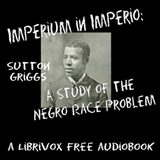
  8. Listen in MyVoxBox: Imperium in Imperio: A Study of the Negro Race Problem

    Imperium in Imperio: A Study of the Negro Race Problem

    Why it is here Imperium in Imperio (1899): Griggs's political thriller about a secret Black shadow government in Texas; a genuinely unexpected book.

    Imperium in Imperio is a historical fiction novel by Sutton Griggs, published in 1899. The novel covers the life of Belton Piedmont, an educated and disciplined black man in the Jim Crow south and his role in a shadow government of black men operated out of a college in Waco, Texas.

    • 5 h 24 min
    • 21 sections
    • English
    • Published 1899
    • Read by Jim Locke

    Recording from LibriVox page for Imperium in Imperio: A Study of the Negro Race Problem

    Listen in MyVoxBox: Imperium in Imperio: A Study of the Negro Race Problem
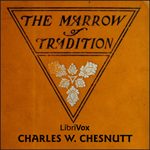
  9. Listen in MyVoxBox: Marrow of Tradition

    Marrow of Tradition

    Why it is here The Marrow of Tradition (1901): Chesnutt's novel built on the 1898 Wilmington massacre, the most direct political fiction in the set.

    In The Marrow of Tradition, Charles W. Chesnutt--using the 1898 Wilmington, North Carolina massacre as a backdrop--probes and exposes the raw nerves and internal machinery of racism in the post-Reconstruction-era South; explores how miscegenation, caste, gender and the idea of white supremacy informed Jim Crow laws; and unflinchingly revisits the most brutal of terror tactics, mob lynchings.

    Read moreShow less

    (Introduction by James K. White)

    • 9 h 52 min
    • 37 sections
    • English
    • Published 1901
    • Read by James K. White

    Recording from LibriVox page for Marrow of Tradition

    Listen in MyVoxBox: Marrow of Tradition
  10. Listen in MyVoxBox: Sport of the Gods

    Sport of the Gods

    Why it is here The Sport of the Gods (1902): Dunbar's only urban novel, a family destroyed by a false accusation and by New York.

    The Sport of the Gods is a novel by Paul Laurence Dunbar, first published in 1902, centered around urban black life. Forced to leave the South, a family falls apart amid the harsh realities of Northern inner city life in this 1902 examination of the forces that extinguish the dreams of African Americans. (Summary from Wikipedia)

    Summary adapted from Wikipedia, used under CC BY-SA 4.0.

    • 4 h 34 min
    • 18 sections
    • English
    • Published 1902
    • Read by Richard Kilmer (1942-2022), mevans, ashleighjane and 3 others

    Recording from LibriVox page for Sport of the Gods

    Listen in MyVoxBox: Sport of the Gods
  11. Listen in MyVoxBox: Goodness of St. Rocque and Other Stories

    Goodness of St. Rocque and Other Stories

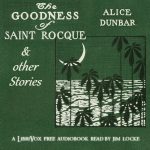
    Why it is here The Goodness of St. Rocque (1899): Alice Dunbar-Nelson's New Orleans Creole stories, a different South from the one in the other books.

    These stories focus on the Creole society of New Orleans and in the process reveals issues facing black Americans at the end of the nineteenth-century. - Summary by Jim Locke

    • 2 h 50 min
    • 14 sections
    • English
    • Published 1899
    • Read by Jim Locke

    Recording from LibriVox page for Goodness of St. Rocque and Other Stories

    Listen in MyVoxBox: Goodness of St. Rocque and Other Stories
  12. Listen in MyVoxBox: Conquest

    Conquest

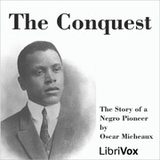
    Why it is here The Conquest (1913): Micheaux's lightly fictionalised account of homesteading in South Dakota, by the man who became the first major Black film-maker.

    "This is the true story of a negro who was discontented and the circumstances that were the outcome of that discontent." While considered a novel, this largely autobiographical story is based on the author's experience as an African-American pioneer in South Dakota. (Summary by MaryAnn)

    • 9 h 33 min
    • 43 sections
    • English
    • Published 1913
    • Read by Kathrine Engan, Geoff Blanchard, BettyB and 5 others

    Recording from LibriVox page for Conquest

    Listen in MyVoxBox: Conquest
  13. Listen in MyVoxBox: Book of American Negro Poetry

    Book of American Negro Poetry

    Why it is here The Book of American Negro Poetry (1922): the Johnson anthology that announced the Renaissance; includes Dunbar, McKay, Spencer and Georgia Douglas Johnson.

    The Book of American Negro Poetry is one of the earliest and most essential anthologies of African-American verse ever brought to print. Edited by writer and diplomat James Weldon Johnson, this collection was published with the hope of bringing to the public a greater awareness of the art and literature created by Black writers.

    Read moreShow less

    This is the first edition of this long-republished anthology and collects seminal works by Paul Dunbar, W.E.B. Du Bois, Claude McKay, Leslie Hill, James Corrothers, and many more. - Summary by ChuckW

    • 5 h 5 min
    • 35 sections
    • English
    • Published 1922
    • Read by Chuck Williamson, Larry Wilson, Michele Fry and 7 others

    Recording from LibriVox page for Book of American Negro Poetry

    Listen in MyVoxBox: Book of American Negro Poetry
  14. Listen in MyVoxBox: Harlem Shadows

    Harlem Shadows

    Why it is here Harlem Shadows (1922): McKay's sonnets, including 'If We Must Die'; usually dated as the opening of the Harlem Renaissance in verse.

    An award winning Jamaican poet who writes passionately about his birth home and his adopted home, USA. Claude McKay vividly describes family life, love, hate, work, and social life. The reader obtains a strong sense of black life through his colorful and emotional poetry. . - Summary by Denise Ray

    • 2 h 5 min
    • 76 sections
    • English
    • Published 1922
    • Read by Denise Ray

    Recording from LibriVox page for Harlem Shadows

    Listen in MyVoxBox: Harlem Shadows
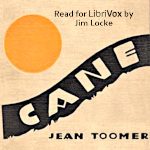
  15. Listen in MyVoxBox: Cane

    Cane

    Why it is here Cane (1923): Toomer's modernist mosaic of stories, poems and a play, moving from rural Georgia to Washington.

    Reading this book, I had a vision of a land, heretofore sunk in the mists of muteness, suddenly rising up into the eminence of song. Innumerable books have been written about the South; some good books have been written in the South. This book is the South. . . . . Part One is the primitive and evanescent world of Georgia.

    Read moreShow less

    Part Two is the threshing and suffering brown world of Washington. . . . Part Three is Georgia again . . . this black womb of the ferment seed: the neurotic, educated, spiritually stirring Negro. From the Forward by Waldo Frank

    • 4 h 41 min
    • 31 sections
    • English
    • Published 1923
    • Read by Jim Locke

    Recording from LibriVox page for Cane

    Listen in MyVoxBox: Cane
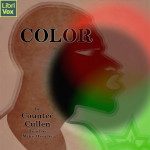
  16. Listen in MyVoxBox: Color

    Color

    Why it is here Color (1925): Cullen's first collection, formally traditional and thematically anything but.

    Countee Cullen’s poetry in Color contemplates Black Americans’ fractured sense of self—at once spiritually tied to homelands where their ancestors were kidnapped and rooted in the white supremacist society where they live.

    Read moreShow less

    With poems about love, tradition, the intertwined lives of Black people and whites, and the experience of a "Negro in a day like this," Color is a profound early work of the Harlem Renaissance. The collection’s most famous poem is "Heritage". (Summary by Mike Overby)

    • 1 h 33 min
    • 74 sections
    • English
    • Published 1925
    • Read by Michael MacTaggert

    Recording from LibriVox page for Color

    Listen in MyVoxBox: Color
  17. Listen in MyVoxBox: Fine Clothes to the Jew

    Fine Clothes to the Jew

    Why it is here Fine Clothes to the Jew (1927): Hughes's blues-inflected second book, attacked in the Black press for its working-class subjects; under an hour.

    Fine Clothes to the Jew is a 1927 poetry collection by Langston Hughes. The collection was widely criticized, especially in the Black press, because it departed from sentimental depictions of African-American culture. - Summary modified from Wikipedia

    Summary adapted from Wikipedia, used under CC BY-SA 4.0.

    • 46 min
    • 6 sections
    • English
    • Published 1927
    • Read by Dar'Keith Lofton

    Recording from LibriVox page for Fine Clothes to the Jew

    Listen in MyVoxBox: Fine Clothes to the Jew
  18. Listen in MyVoxBox: Quicksand

    Quicksand

    Why it is here Quicksand (1928): Larsen's first novel, Helga Crane's restless search from a Southern school to Harlem to Copenhagen and back.

    Quicksand is a 1928 novel by Nella Larsen, a writer of the Harlem Renaissance. It focuses on Helga Crane, a mixed-race woman who is a schoolteacher in the American south. As the novel opens, she suddenly decides to give up her teaching position and go north, back to her roots in Chicago.

    Read moreShow less

    Helga's restless search for identity is semi-autobiographical, inspired by Larsen's own struggles to reconcile her mixed heritage with the racism of 1920s America. Although this novel was published after 1923, the copyright was never renewed and is therefore in the public domain. (Introduction by Elizabeth Klett)

    • 5 h 4 min
    • 25 sections
    • English
    • Published 1928
    • Read by Elizabeth Klett

    Recording from LibriVox page for Quicksand

    Listen in MyVoxBox: Quicksand
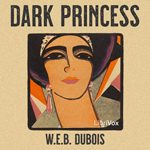
  19. Listen in MyVoxBox: Dark Princess

    Dark Princess

    Why it is here Dark Princess (1928): Du Bois's romance of a Black American and an Indian princess plotting a global rising of the 'darker races'; strange and ambitious.

    This story begins as Matthew Towns, a brilliant young Black medical student, is dismissed from medical school because the white board has decided white women are not appropriate patients for a Black doctor. In disgust with his own country, Matthew leaves America and goes to Europe.

    Read moreShow less

    While in Berlin, his life is changed forever when he attends a meeting of people who are interested in uplifting all the “darker races” of the world. He begins from there a four-year journey that sees his fate entwined with the Dark Princess, who is royalty from India. In this story from 1928, Du Bois recounts Towns’ adventures, but also uses events, conversations, and letters between the characters to explore racial and social justice issues. (Summary by Verla Viera)

    • 12 h 35 min
    • 28 sections
    • English
    • Published 1928
    • Read by Verla Viera

    Recording from LibriVox page for Dark Princess

    Listen in MyVoxBox: Dark Princess
  20. Listen in MyVoxBox: Blacker the Berry

    Blacker the Berry

    Why it is here The Blacker the Berry (1929): Thurman's novel of colourism inside the Black community, the bitterest book of the Renaissance.

    An exploration into the life of young African American, Emma Lou, whose self-image is negatively impacted by the stigmas of colorism and intra-community racism. - Summary by James K. White

    • 6 h 30 min
    • 9 sections
    • English
    • Published 1929
    • Read by James K. White

    Recording from LibriVox page for Blacker the Berry

    Listen in MyVoxBox: Blacker the Berry