Curated collection

Science Fiction

Time travel, alien worlds, scientific experiments and imagined societies: familiar starting points alongside less familiar speculative journeys.

20 free audiobooks, about 104 hours

  1. Listen in MyVoxBox: Time Machine (Version 2)

    Time Machine (Version 2)

    Why it is here A compact journey into the far future opens questions about human society as well as the possibilities of time travel.

    Surely the Time Traveler threw great dinner parties! His guests were treated to a once-in-forever trial of a miniature time machine - an exquisite miniature that acted so flawlessly as to appear to be stage magic. That his guests did not believe the explanation - the machine vanished into the mists of the future - was patent.

    Read moreShow less

    Still, a couple of the more thoughtful had reservations about branding the demonstration an outright trickery. And what about the nearly-complete full-size Machine in the Traveler's laboratory?

    Confronted at the next party by the disheveled Traveler, who had apparently suffered privations and who displayed two curious flowers of no known type, the Narrator's wonderment increased. For the Traveler provided a perfectly arresting story to explain his condition - a surprising tale of a far future where humankind divides into a carefree above-ground race, the Eloi, and a mechanical subterranean race, the Morlocks. A tale in which it appears that the inheritors of the Earth inhabit it as cattle for the feeding of their underground cousins!

    Believe, or disbelieve? But perhaps the inventive genius of a man who can translate "thousands of millions of days" of time travel into an exact date should not be doubted! (Intro by Mark F. Smith)

    • 3 h 39 min
    • 12 sections
    • English
    • Published 1895
    • Read by Mark F. Smith

    Recording from LibriVox page for Time Machine (Version 2)

    Listen in MyVoxBox: Time Machine (Version 2)

  2. Listen in MyVoxBox: Little Fuzzy

    Little Fuzzy

    Why it is here Small alien creatures prompt a dispute about intelligence, personhood and corporate power.

    Jack Holloway, a prospector on the planet Zarathustra discovers small furry creatures. These creatures are obviously intelligent, but are they animals or are they sapient? If they are sapient the planet will be declared a protected zone and the company that is developing the planet commercially will lose their exclusive rights to the resources... (Summary by tabithat)

    • 5 h 37 min
    • 17 sections
    • English
    • Published 1962
    • Read by tabithat

    Recording from LibriVox page for Little Fuzzy

    Listen in MyVoxBox: Little Fuzzy
  3. Listen in MyVoxBox: Frankenstein; or The Modern Prometheus (1818)

    Frankenstein; or The Modern Prometheus (1818)

    Why it is here The explicitly identified 1818 text explores creating life and responsibility toward a creation. A dark, substantial novel.

    Frankenstein; or, The Modern Prometheus is a novel written by the British author Mary Shelley. Shelley wrote the novel when she was 18 years old. The first edition was published anonymously in London in 1818, and this audiobook is read from that text. Shelley's name appeared on the revised third edition, published in 1831.

    Read moreShow less

    The title of the novel refers to the scientist, Victor Frankenstein, who learns how to create life and creates a being in the likeness of man, but larger than average and more powerful. In modern popular culture, people have tended to refer to the Creature as "Frankenstein" (especially in films since 1931), despite this being the name of the scientist, and the creature being unnamed in the book itself. Frankenstein is a novel infused with elements of the Gothic novel and the Romantic movement. It was also a warning against the "over-reaching" of modern man and the Industrial Revolution, alluded to in the novel's subtitle, The Modern Prometheus. The story has had an influence across literature and popular culture and spawned a complete genre of horror stories and films. It is arguably considered the first fully-realised science fiction novel and raises many issues still relevant to today's society. (Summary from Wikipedia.org, adapted by Cori Samuel.)

    Summary adapted from Wikipedia, used under CC BY-SA 4.0.

    • 7 h 59 min
    • 29 sections
    • English
    • Published 1818
    • Read by Cori Samuel

    Recording from LibriVox page for Frankenstein; or The Modern Prometheus (1818)

    Listen in MyVoxBox: Frankenstein; or The Modern Prometheus (1818)
  4. Listen in MyVoxBox: Machine Stops

    Machine Stops

    Why it is here A short, unsettling vision of isolated people whose needs are supplied by an all-encompassing Machine.

    Human beings live apart in cells beneath the Earth, depending on an all-encompassing Machine for their daily needs and communication. E. M. Forster’s short speculative story asks what happens when direct experience becomes unfamiliar.

    • 1 h 12 min
    • 3 sections
    • English
    • Published 1909
    • Read by Jenilee and E. Tavano

    Recording from LibriVox page for Machine Stops

    Listen in MyVoxBox: Machine Stops
  5. Listen in MyVoxBox: Deathworld

    Deathworld

    Why it is here Planetary survival becomes an ecological problem as a newcomer encounters a hostile world and competing human responses.

    Harry Harrison is best known for his Stainless Steel Rat stories and the novel Make Room! Make Room! which was adapted for film as Soylent Green. Deathworld is the first in a series of novels begun in 1960 and originally serialized in Astounding Science Fiction Magazine.

    Read moreShow less

    It’s the story of Jason dinAlt a professional gambler with psionic skills who finds himself on Pyrrus the deadliest planet to be colonized by humanity. Violent weather, active tectonics, heavy gravity, abundant predators, and a hostile splinter group of colonists is only the beginning of Jason’s quest to learn the truth about Pyrrus. (Summary by Gregg Margarite)

    • 5 h 23 min
    • 28 sections
    • English
    • Published 1960
    • Read by Gregg Margarite (1957-2012)

    Recording from LibriVox page for Deathworld

    Listen in MyVoxBox: Deathworld
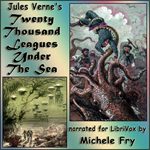
  6. Listen in MyVoxBox: Twenty Thousand Leagues Under The Sea (Version 3)

    Twenty Thousand Leagues Under The Sea (Version 3)

    Why it is here Captain Nemo's submarine opens a long underwater expedition combining engineering imagination and marine adventure. Frederick P. Walter translation.

    Professor Pierre Aronnax joins Captain Nemo aboard the submarine Nautilus for an underwater expedition. Jules Verne combines marine adventure with imagined engineering in this long novel. This recording uses the Frederick P. Walter English translation.

    • 16 h 46 min
    • 48 sections
    • English
    • Published 1991
    • Read by Michele Fry

    Recording from LibriVox page for Twenty Thousand Leagues Under The Sea (Version 3)

    Listen in MyVoxBox: Twenty Thousand Leagues Under The Sea (Version 3)
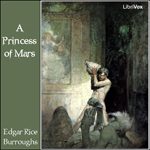
  7. Listen in MyVoxBox: Princess of Mars (version 2)

    Princess of Mars (version 2)

    Why it is here An opening Barsoom adventure represents planetary romance, with combat and colonial-era racial and gender stereotypes.

    John Carter, an American Civil War veteran, goes prospecting in Arizona and, when set upon by Indians, is mysteriously transported to Mars, called "Barsoom" by its inhabitants. Carter finds that he has great strength on this planet, due to its lesser gravity.

    Read moreShow less

    Carter soon falls in among the Tharks, a nomadic tribe of the planet's warlike, four-armed, green inhabitants. Thanks to his strength and combat abilities he rises in position in the tribe and earns the respect eventually the friendship of Tars Tarkas, one of the Thark chiefs.

    The Tharks subsequently capture Dejah Thoris, Princess of Helium, a member of the humanoid red Martian race. The red Martians inhabit a loose network of city states and control the desert planet's canals, along which its agriculture is concentrated. Carter rescues her from the green men to return her to her people. (Summary from Wikipedia)

    Summary adapted from Wikipedia, used under CC BY-SA 4.0.

    • 7 h 26 min
    • 14 sections
    • English
    • Published 1911
    • Read by Mark Nelson

    Recording from LibriVox page for Princess of Mars (version 2)

    Listen in MyVoxBox: Princess of Mars (version 2)
  8. Listen in MyVoxBox: Flatland: A Romance of Many Dimensions

    Flatland: A Romance of Many Dimensions

    Why it is here Dimensional puzzles and social satire create a speculative world unlike the spaceships and laboratories elsewhere in the collection.

    Flatland: A Romance of Many Dimensions is an 1884 science fiction novella by the English schoolmaster Edwin Abbott Abbott. As a satire, Flatland offered pointed observations on the social hierarchy of Victorian culture.

    Read moreShow less

    However, the novella's more enduring contribution is its examination of dimensions; in a foreword to one of the many publications of the novella, noted science writer Isaac Asimov described Flatland as "The best introduction one can find into the manner of perceiving dimensions." As such, the novella is still popular amongst mathematics, physics and computer science students. (Summary by Wikipedia)

    Summary adapted from Wikipedia, used under CC BY-SA 4.0.

    • 4 h 14 min
    • 9 sections
    • English
    • Published 1884
    • Read by Ruth Golding

    Recording from LibriVox page for Flatland: A Romance of Many Dimensions

    Listen in MyVoxBox: Flatland: A Romance of Many Dimensions
  9. Listen in MyVoxBox: Time Traders

    Time Traders

    Why it is here A mission into the past combines time travel, espionage and Bronze Age adventure.

    If it is possible to conquer space, then perhaps it is also possible to conquer time. At least that was the theory American scientists were exploring in an effort to explain the new sources of knowledge the Russians possessed. Perhaps Russian scientists had discovered how to transport themselves back in time in order to learn long-forgotten secrets of the past.

    Read moreShow less

    That was why young Ross Murdock, above average in intelligence but a belligerently independent nonconformist, found himself on a "hush-hush" government project at a secret base in the Arctic. The very qualities that made him a menace in civilized society were valuable traits in a man who must successfully act the part of a merchant trader of the Beaker people during the Bronze Age.

    For once they were transferred by time machine to the remote Baltic region where the Russian post was located, Ross and his partner Ashe were swept into a fantastic action-filled adventure involving Russians, superstitious prehistoric men, and the aliens of a lost galactic civilization that demanded every ounce of courage the Americans possessed. [summary taken from Gutenberg e-text]

    • 7 h 4 min
    • 18 sections
    • English
    • Published 1958
    • Read by R. J. Davis

    Recording from LibriVox page for Time Traders

    Listen in MyVoxBox: Time Traders
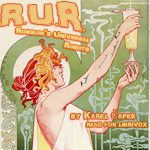
  10. Listen in MyVoxBox: R.U.R. (Rossum’s Universal Robots)

    R.U.R. (Rossum’s Universal Robots)

    Why it is here A full-cast robot play asks what manufactured workers owe their makers—and what their makers owe them. Includes violence.

    Helena Glory, as the daughter of a major industrial power's president, is a woman on a mission. She faces the island factory of Rossum's Universal Robots, the world's leading company in robotic engineering. She is convinced that these new creations called robots they make are deserving of rights like humans do.

    Read moreShow less

    Everyone else is convinced robots are nothing more than tools for human use. Is it so, or is a robot rebellion becoming a more likely prospect as the robots start to seem more intelligent than first thought?

    First performed in English in 1922, R.U.R. is most notable for being the play that introduced the word "robot" into the English language and one of the popular early examples of the science fiction genre onstage. (Mary Kay)Cast List:

    Narrator: John Trevithick Helena Glory / Robot Helena: Sarah Terry Harry Domin / Primus: ToddHW Dr. Gall: Barry Streifert Mr. Fabry: James Callaghan Dr. Hallemeier / Consul Busman: SteveToner Mr. Alquist: Beth Thomas Nana: KHand Radius: T. Layne Sulla / First Robot: Tina Nuzzi Marius / Fourth Robot: Rosslyn Carlyle A Servant: Etel Buss Second Robot / Third Robot: Kitty Kay / Mary Kay

    • 1 h 47 min
    • 4 sections
    • English
    • Published 1922
    • Read by Tina Nuzzi, Beth Thomas (1974-2020), ToddHW and 10 others

    Recording from LibriVox page for R.U.R. (Rossum’s Universal Robots)

    Listen in MyVoxBox: R.U.R. (Rossum’s Universal Robots)
  11. Listen in MyVoxBox: War of the Worlds (version 2)

    War of the Worlds (version 2)

    Why it is here An alien invasion supplies a different Wells premise from time travel, seen through human fear and vulnerability.

    War of the Worlds by Herbert George Wells (H.G. Wells) was published in 1898 at a time when he wrote a series of novels related to a number of historical events of the time. The most important of these was the unification and militarization of Germany.

    Read moreShow less

    The story, written in a semi-documentary style, is told in the first person by an unnamed observer. It tells of the events which happen mostly in London and the county of Surrey, England, when a number of vessels manned by aliens are fired from Mars and land on Earth. (Summary by Rebecca)

    • 6 h 36 min
    • 27 sections
    • English
    • Published 1898
    • Read by Rebecca Dittman

    Recording from LibriVox page for War of the Worlds (version 2)

    Listen in MyVoxBox: War of the Worlds (version 2)
  12. Listen in MyVoxBox: Herland

    Herland

    Why it is here An imagined women's society offers feminist utopian speculation, alongside racially exclusive ideals and reproductive-selection assumptions.

    Herland is a utopian novel from 1915, written by feminist Charlotte Perkins Gilman. The book describes an isolated society comprised entirely of Aryan women who reproduce via parthenogenesis (asexual reproduction). The result is an ideal social order, free of war, conflict and domination. It first appeared as a serial in Perkins' monthly magazine Forerunner. (Summary from Wikipedia)

    Summary adapted from Wikipedia, used under CC BY-SA 4.0.

    • 5 h 34 min
    • 12 sections
    • English
    • Published 1915
    • Read by Heather Ordover, Elizabeth Klett and Leon Mire

    Recording from LibriVox page for Herland

    Listen in MyVoxBox: Herland
  13. Listen in MyVoxBox: Watchbird

    Watchbird

    Why it is here Three short pieces mix machine ethics, alien behaviour and solitude; Watchbird is one story in this recording.

    3 Robert Sheckley short stories that demonstrate the breadth of his fantastic imagination. In Watchbird, the question "can machines solve human problems?" is answered with a resounding YES! But there may be a few unforeseen glitches. Just a few.

    Read moreShow less

    Warrior Race drops us into an alien race of warriors who fight in a way you will never be able to imagine until you listen. And Beside Still Waters is a gentle story that shows us a man who really wants to get away from it all ... sitting on a rock in the asteroid belt with only a robot for a friend. No girls allowed! A poignant and unsettling story to say the least.

    • 1 h 30 min
    • 4 sections
    • English
    • Published 1951
    • Read by Phil Chenevert

    Recording from LibriVox page for Watchbird

    Listen in MyVoxBox: Watchbird
  14. Listen in MyVoxBox: Lost World (version 2)

    Lost World (version 2)

    Why it is here A dinosaur expedition brings scientific adventure back to Earth. The text contains colonial and racial stereotypes.

    Imagine a strange, tropical place that is almost inaccessible. Time appears to have stood still there. Species of animal and plant life not seen elsewhere on Earth, except in the fossil record, inhabit the place. The lakes heave with the shapes of huge grey bulks moving under the surface.

    Read moreShow less

    The woods are places where chittering cries move about above your head, as powerful apes move swiftly in the canopy of leaves. Then, a tree splinters nearby, and a dinosaur steps out from his hiding place... and he's eyeing YOU.

    Jurassic Park? Not quite. The Lost World was an inspiration for Jurassic Park; in fact, a character in J.P. has the same name as one of the chief characters in The Lost World. It also inspired King Kong. But this is the original! Four adventurers go off to find the place shown in a dead man's sketch book - they find a war between apes and Indians, prowling dinosaurs, a sparkly treasure hidden in the blue clay - they find the Lost World. And because of the treachery of a native guide, their means of escape is destroyed!

    • 8 h 23 min
    • 16 sections
    • English
    • Published 1912
    • Read by Mark F. Smith

    Recording from LibriVox page for Lost World (version 2)

    Listen in MyVoxBox: Lost World (version 2)
  15. Listen in MyVoxBox: City at World's End

    City at World's End

    Why it is here A town faces an extraordinary cosmic predicament, giving speculative adventure community-wide stakes.

    A surprise nuclear war may cause the End of the World, but not the way anyone could have imagined. A classic science fiction tale from Galaxy Magazine. (Summary by Mark Nelson)

    • 7 h 6 min
    • 21 sections
    • English
    • Published 1951
    • Read by Mark Nelson

    Recording from LibriVox page for City at World's End

    Listen in MyVoxBox: City at World's End
  16. Listen in MyVoxBox: Blazing World

    Blazing World

    Why it is here An early imagined world blends fantasy and natural philosophy. Its older, discursive prose rewards patient listening.

    The Blazing World by Margaret Cavendish is, all at once, a satire, a treatise on natural philosophy, a work of proto-science fiction, and a defiant venture into a scientific world where women were not usually allowed. It tells the tale of a young Lady who is kidnapped by a man that tries to sail away with her.

    Read moreShow less

    Through divine interference, however, the ship is tossed into a storm and everyone but the Lady perishes. Blown up to the North Pole, she inadvertently passes into to another world, the Blazing World, where she is almost immediately made supreme ruler. As the Lady begins to exercise her will, Cavendish lays out her own Utopia and discusses a wide range of scientific, political, social, and religious topics. But when a war breaks out in her home world, what will the Lady do with all power of the Blazing World behind her? - Summary by Sarah Terry

    • 4 h 3 min
    • 10 sections
    • English
    • Published 1666
    • Read by Sarah Terry

    Recording from LibriVox page for Blazing World

    Listen in MyVoxBox: Blazing World
  17. Listen in MyVoxBox: Second Variety

    Second Variety

    Why it is here Autonomous weapons and uncertainty about who is human make a compact, violent story of machine warfare.

    Early victories by the USSR in a global nuclear war cause the United Nations government to retreat to the moon leaving behind troops and fierce autonomous robots called “Claws”, which reproduce and redesign themselves in unmanned subterranean factories.

    Read moreShow less

    After six bloody years of conflict the Soviets call for an urgent conference and UN Major Joseph Hendricks sets out to meet them. Along the way he will discover what the Claws have been up to, and it isn’t good… - Second Variety was first published in the May 1953 edition of Space Science Fiction Magazine. (Summary by Gregg Margarite)

    • 1 h 44 min
    • 2 sections
    • English
    • Published 1953
    • Read by Gregg Margarite (1957-2012)

    Recording from LibriVox page for Second Variety

    Listen in MyVoxBox: Second Variety
  18. Listen in MyVoxBox: Black Amazon of Mars (Version 3)

    Black Amazon of Mars (Version 3)

    Why it is here An Eric John Stark adventure on a frozen Mars offers a short planetary expedition. Includes violence and torture.

    In his final adventure on Mars, Eric John Stark acquires a relic of an ancient Martian hero, a gem or lens which is believed to be the key to the strength of Kushat, the city that guards the Gates of Death in the frozen north.

    Read moreShow less

    A brief inspection of the artifact plunges Stark into the mind of its creator, where he sees, through those long-dead eyes, the unutterably ancient, beautiful, and evil Martian race who are imprisoned in the ice beyond the Gates of Death, alive and plotting to reclaim Mars for themselves and to extend the ice, their world, around the whole planet. Falling into the hands of roving outlaws, Stark survives torture and overcomes his cruel torturer, thereby winning the respect of the leader, who wears black clothing and a fearful mask. After a daring escape, Stark makes his way to Kushat, with the double intent of restoring the artifact and warning the city that the outlaw band intends to attack it. He finds both tasks difficult but at length succeeds in persuading the city officials of the danger. The battle which ensues costs both sides dearly, and it also precipitates the main action of the novel, for a citizen flees the falling city intent upon opening the Gates of Death in the hope that whatever lies beyond will overwhelm the invaders. Stark pursues him, still carrying the ancient amulet, and is himself pursued by the now unmasked, black-clad leader of the outlaw band. Finally three antagonists find themselves bound together in a struggle with the ancients for possession of the planet Mars. (This story was later expanded in book form under the title People of the Talisman 1964.) - Summary by T. A. Copeland

    • 2 h 40 min
    • 9 sections
    • English
    • Read by Thomas A. Copeland

    Recording from LibriVox page for Black Amazon of Mars (Version 3)

    Listen in MyVoxBox: Black Amazon of Mars (Version 3)
  19. Listen in MyVoxBox: Creatures That Time Forgot

    Creatures That Time Forgot

    Why it is here Human lives compressed into days make an unfamiliar Bradbury story an urgent closing discovery.

    Mad, impossible world! Sun-blasted by day,

    cold-wracked by night—and life condensed by

    radiation into eight days! Sim eyed the

    Ship—if he only dared reach it and

    escape! ... but it was more than half an

    Read moreShow less

    hour distant—the limit of life itself! - Summary by Planet Stories, Fall 1946

    • 1 h 51 min
    • 7 sections
    • English
    • Published 1946
    • Read by Ben Tucker

    Recording from LibriVox page for Creatures That Time Forgot

    Listen in MyVoxBox: Creatures That Time Forgot