Curated collection

Biographies and memoirs

Lives in science, art, work, travel and public affairs, told through personal recollection and biography. Each account has its own perspective.

20 free audiobooks, about 125 hours

  1. Listen in MyVoxBox: Story of My Life

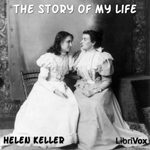
    Story of My Life

    Why it is here Keller recalls learning, communication and education. This recording contains the autobiographical section, excluding the separate letters and supplement.

    The Story of My Life is a personal account of Helen Keller's life, from her early days to those as an adult. It includes how she came to meet her teacher Ann Sullivan, and learnt to communicate using the manual alphabet. It then goes on to chronicle her days as a college student. (Summary by Maria)

    • 3 h 51 min
    • 23 sections
    • English
    • Published 1903
    • Read by Maria

    Recording from LibriVox page for Story of My Life
    Listen in MyVoxBox: Story of My Life
  2. Listen in MyVoxBox: Narrative of the Life of Frederick Douglass

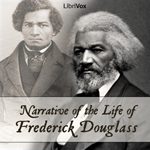
    Narrative of the Life of Frederick Douglass

    Why it is here A short first-person account of enslavement, literacy and freedom, with violence and dehumanizing language central to its history.

    Narrative of the Life of Frederick Douglass is a memoir and treatise on abolition written by famous orator and ex-slave, Frederick Douglass. It is generally held to be the most famous of a number of narratives written by former slaves during the same period.

    Read moreShow less

    In factual detail, the text describes the events of his life and is considered to be one of the most influential pieces of literature to fuel the abolitionist movement of the early 19th Century in the United States. (Summary by Jeanette)

    • 4 h 3 min
    • 13 sections
    • English
    • Published 1845
    • Read by Jeanette Ferguson

    Recording from LibriVox page for Narrative of the Life of Frederick Douglass

    Listen in MyVoxBox: Narrative of the Life of Frederick Douglass
  3. Listen in MyVoxBox: Pierre Curie

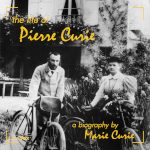
    Pierre Curie

    Why it is here Marie Curie's portrait of Pierre includes her own autobiographical notes, joining scientific work, family life and loss.

    This biography of the noted French physicist Pierre Curie was written by his wife, the renowned physicist Marie Curie. In it, she not only chronicles the scientific accomplishments of her husband, but also provides unique insight into his family life and personality. The book concludes with a four chapter autobiography of the author. - Summary by Ciufi Galeazzi

    • 5 h 11 min
    • 13 sections
    • English
    • Published 1923
    • Read by Ciufi Galeazzi

    Recording from LibriVox page for Pierre Curie

    Listen in MyVoxBox: Pierre Curie
  4. Listen in MyVoxBox: Wonderful Adventures of Mrs. Seacole in Many Lands

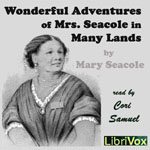
    Wonderful Adventures of Mrs. Seacole in Many Lands

    Why it is here Travel, practical care and battlefield nursing give Mary Seacole's memoir a wide range of experience.

    I should have thought that no preface would have been required to introduce Mrs. Seacole to the British public, or to recommend a book which must, from the circumstances in which the subject of it was placed, be unique in literature.

    Read moreShow less

    If singleness of heart, true charity, and Christian works; if trials and sufferings, dangers and perils, encountered boldly by a helpless woman on her errand of mercy in the camp and in the battle-field, can excite sympathy or move curiosity, Mary Seacole will have many friends and many readers. She is no Anna Comnena, who presents us with a verbose history, but a plain truth-speaking woman, who has lived an adventurous life amid scenes which have never yet found a historian among the actors on the stage where they passed. I have witnessed her devotion and her courage; I have already borne testimony to her services to all who needed them. She is the first who has redeemed the name of “sutler” from the suspicion of worthlessness, mercenary baseness, and plunder; and I trust that England will not forget one who nursed her sick, who sought out her wounded to aid and succour them, and who performed the last offices for some of her illustrious dead. (Summary from the Preface by W. H. Russell)

    • 5 h 58 min
    • 19 sections
    • English
    • Published 1857
    • Read by Cori Samuel

    Recording from LibriVox page for Wonderful Adventures of Mrs. Seacole in Many Lands

    Listen in MyVoxBox: Wonderful Adventures of Mrs. Seacole in Many Lands
  5. Listen in MyVoxBox: Autobiography of a Clown

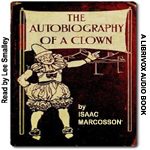
    Autobiography of a Clown

    Why it is here Jules Turnour's circus life, as told to credited author Isaac Marcosson, makes a short and unexpected memoir.

    This "as told to" autobiography of Jules Turnour is based on a popular article that appeared in the Saturday Evening Post in 1909. Turnour relates through Marcosson his personal history and that of the circus, both in Europe and the United States.

    Read moreShow less

    By recounting touching, amusing, and heartbreaking events that he experienced or witnessed, he demonstrates his love of circus life and his craft. "As soon as I hear the music of the band...and the indescribable movement of the crowd toward the big tent...I am stirred to action, the weariness falls away like magic, and I am young again." Photographs of Mr. Turnour are interspersed throughout the text, which is accessible at http://www.gutenberg.org/ebooks/46139 ~ Lee Smalley

    • 1 h 29 min
    • 8 sections
    • English
    • Published 1910
    • Read by Lee Smalley

    Recording from LibriVox page for Autobiography of a Clown

    Listen in MyVoxBox: Autobiography of a Clown
  6. Listen in MyVoxBox: Autobiography of Benjamin Franklin

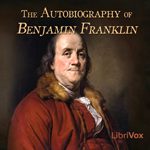
    Autobiography of Benjamin Franklin

    Why it is here A printer, inventor and civic organizer reflects on his life and practical attempts at self-improvement.

    Franklin wrote his autobiography in the form of an extended letter to his son. While recording the events of his life, he adds instructions for good living which makes this work America’s first “How to Succeed” book. Edited by Frank Woodworth Pine (1869-1919). (Summary by Gary)

    • 7 h 31 min
    • 21 sections
    • English
    • Published 1916
    • Read by Gary Gilberd

    Recording from LibriVox page for Autobiography of Benjamin Franklin

    Listen in MyVoxBox: Autobiography of Benjamin Franklin
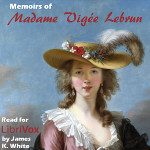
  7. Listen in MyVoxBox: Memoirs of Madame Vigée Lebrun

    Memoirs of Madame Vigée Lebrun

    Why it is here An artist recounts her career, exile from revolutionary France and painting across Europe.

    This memoirs chronicles Madame Vigée Lebrun's childhood and the early discovery of her talent, the fortuitous break that introduced her to the world of "portraiture of the stars," her expeditious flight from France at the height of the French Revolution, her continued success as a portraitist for the various royal houses of Europe, and her ultimate return to France.

    Read moreShow less

    In this memoirs, Lebrun illustrates how she overcame the prejudices of the art world that prescribed how women painters could practice their art form, as well as the subject matter they could paint. (James K. White)

    • 7 h 22 min
    • 18 sections
    • English
    • Published 1903
    • Read by James K. White

    Recording from LibriVox page for Memoirs of Madame Vigée Lebrun

    Listen in MyVoxBox: Memoirs of Madame Vigée Lebrun
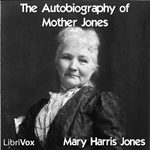
  8. Listen in MyVoxBox: Autobiography of Mother Jones

    Autobiography of Mother Jones

    Why it is here Labor organizing and working people's struggles add a forceful perspective beyond the lives of rulers and celebrities.

    Mary Harris Jones recalls her work as a labor organizer and the struggles of working people. This is a participant’s account of industrial conflict and organizing in the United States.

    • 5 h 40 min
    • 27 sections
    • English
    • Published 1925
    • Read by Denny Sayers (d. 2015), Kathy, Maddie and 6 others

    Recording from LibriVox page for Autobiography of Mother Jones

    Listen in MyVoxBox: Autobiography of Mother Jones
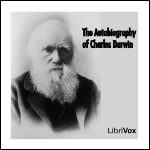
  9. Listen in MyVoxBox: Autobiography of Charles Darwin

    Autobiography of Charles Darwin

    Why it is here A concise account of a scientific mind's development. This is the Francis Darwin edited text with omissions, not the later restored edition.

    The Autobiography of Charles Darwin is the autobiography of the British naturalist Charles Darwin which was published in 1887, five years after his death.

    Darwin wrote the book, which he entitled Recollections of the Development of my Mind and Character, for his family. He states that he started writing it on about May 28, 1876 and had finished it by August 3.

    Read moreShow less

    The book was edited by Charles Darwin's son Francis Darwin, who removed several passages about Darwin's critical views of God and Christianity (see Charles Darwin's views on religion). It was published in London by John Murray as part of The life and letters of Charles Darwin, including an autobiographical chapter.

    The omitted passages were later restored by Darwin's granddaughter Nora Barlow in a 1958 edition to commemorate the 100th anniversary of the publication of The Origin. This edition was published in London by Collins under the title of The Autobiography of Charles Darwin 1809-1882. With the original omissions restored. Edited and with appendix and notes by his granddaughter Nora Barlow.

    The original is in the public domain as its copyright has expired, but the later version remains under copyright. (Summary by Wikipedia)

    Summary adapted from Wikipedia, used under CC BY-SA 4.0.

    • 2 h 45 min
    • 6 sections
    • English
    • Published 1887
    • Read by LivelyHive

    Recording from LibriVox page for Autobiography of Charles Darwin

    Listen in MyVoxBox: Autobiography of Charles Darwin
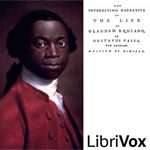
  10. Listen in MyVoxBox: Interesting Narrative of the Life of Olaudah Equiano

    Interesting Narrative of the Life of Olaudah Equiano

    Why it is here Enslavement, seafaring, freedom and business connect one life to the eighteenth-century Atlantic world.

    The Interesting Narrative of the Life of Olaudah Equiano, written in 1789, is the autobiography of Olaudah Equiano. It discusses his time spent in slavery, serving primarily on galleys, documents his attempts at becoming an independent man through his study of the Bible, and his eventual success in gaining his own freedom and in business thereafter.

    Read moreShow less

    The book contains an interesting discussion of slavery in West Africa and illustrates how the experience differs from the dehumanising slavery of the Americas. The Interesting Narrative of the Life of Olaudah Equiano is also one of the first widely read slave narratives. It was generally reviewed favorably. (Wikipedia)

    This work was produced to commemorate the 200th anniversary of the abolition of the slave trade in Great Britain.

    Summary adapted from Wikipedia, used under CC BY-SA 4.0.

    • 8 h 5 min
    • 13 sections
    • English
    • Published 1789
    • Read by Kara Shallenberg (1969-2023), Cori Samuel, Ezwa and 7 others

    Recording from LibriVox page for Interesting Narrative of the Life of Olaudah Equiano

    Listen in MyVoxBox: Interesting Narrative of the Life of Olaudah Equiano
  11. Listen in MyVoxBox: Life of Charlemagne (Einhard)

    Life of Charlemagne (Einhard)

    Why it is here A short medieval biography offers a court historian's portrait of Charlemagne, with the loyalties of that viewpoint.

    Einhard was employed by Charlemagne as a court historian. At the request of Charlemagne's son and successor Louis the Pious, he wrote a biography of Charlemagne, the Vita Karoli Magni or Life of Charlemagne (c. 817–830), which provides much direct information about Charlemagne's life and character.

    Read moreShow less

    In composing this he made full use of the Frankish Royal annals. Einhard's literary model was the classical work of the Roman historian Suetonius, the Lives of the Caesars. (summary adapted from Wikipedia by K. Merline)

    Summary adapted from Wikipedia, used under CC BY-SA 4.0.

    • 1 h 14 min
    • 5 sections
    • English
    • Published 1880
    • Read by Kara Shallenberg (1969-2023), David Barnes, Lizzie Driver and 2 others

    Recording from LibriVox page for Life of Charlemagne (Einhard)

    Listen in MyVoxBox: Life of Charlemagne (Einhard)
  12. Listen in MyVoxBox: My Reminiscences

    My Reminiscences

    Why it is here Childhood, family, education and music shape Tagore's recollections of becoming a writer.

    These Reminiscences were written and published by the Author in his fiftieth year, shortly before he started on a trip to Europe and America for his failing health in 1912. It was in the course of this trip that he wrote for the first time in the English language for publication. (from preface)

    • 6 h 53 min
    • 44 sections
    • English
    • Published 1917
    • Read by bala

    Recording from LibriVox page for My Reminiscences

    Listen in MyVoxBox: My Reminiscences
  13. Listen in MyVoxBox: Pioneer Work in Opening the Medical Profession to Women

    Pioneer Work in Opening the Medical Profession to Women

    Why it is here Blackwell describes building a medical career in a profession that excluded women, in a substantial account of institutional struggle.

    A fascinating account of the first woman to receive a medical degree in the United States. She writes of her struggles in being accepted to a medical school (at one point she is advised to disguise herself as a male).

    Read moreShow less

    She details her experiences while in the process of obtaining her degree, and her work both with patients and administratively, helping to found medical schools and hospitals for women. Summary by Phyllis Vincelli

    • 10 h 52 min
    • 29 sections
    • English
    • Published 1895
    • Read by PhyllisV

    Recording from LibriVox page for Pioneer Work in Opening the Medical Profession to Women

    Listen in MyVoxBox: Pioneer Work in Opening the Medical Profession to Women
  14. Listen in MyVoxBox: Indian Boyhood

    Indian Boyhood

    Why it is here Eastman recalls a Dakota childhood through family teaching, outdoor skills, games and oral tradition.

    Charles Alexander Eastman recalls his Dakota childhood through family teaching, outdoor skills, games and oral tradition. The memoir includes experiences of danger, learning and communal life.

    • 5 h 48 min
    • 24 sections
    • English
    • Read by Carol Pelster

    Recording from LibriVox page for Indian Boyhood

    Listen in MyVoxBox: Indian Boyhood
  15. Listen in MyVoxBox: Queen Victoria

    Queen Victoria

    Why it is here Strachey's shaped portrait of Victoria adds literary biography and a public life alongside the autobiographies.

    Lytton Strachey’s first great success, and his most famous achievement, was "Eminent Victorians" (1918), a collection of four short biographies of Victorian heroes. With a dry wit, he exposed the human failings of his subjects and what he saw as the hypocrisy at the centre of Victorian morality. This work was followed in the same style by "Queen Victoria" (1921). (Summary from Wikipedia)

    Summary adapted from Wikipedia, used under CC BY-SA 4.0.

    • 10 h 20 min
    • 22 sections
    • English
    • Published 1921
    • Read by R. S. Steinberg

    Recording from LibriVox page for Queen Victoria

    Listen in MyVoxBox: Queen Victoria
  16. Listen in MyVoxBox: Incidents in the Life of a Slave Girl, Written by Herself

    Incidents in the Life of a Slave Girl, Written by Herself

    Why it is here Jacobs recounts enslavement and her efforts to protect her children. Includes sexual coercion, violence and dehumanizing language.

    Harriet Jacobs' autobiography, written under the pseudonym Linda Brent, details her experiences as a slave in North Carolina, her escape to freedom in the north, and her ensuing struggles to free her children. The narrative was partly serialized in the New York Tribune, but was discontinued because Jacobs' depictions of the sexual abuse of female slaves were considered too shocking.

    Read moreShow less

    It was published in book form in 1861. (Summary by Elizabeth Klett).

    • 7 h 47 min
    • 43 sections
    • English
    • Published 1861
    • Read by Elizabeth Klett

    Recording from LibriVox page for Incidents in the Life of a Slave Girl, Written by Herself

    Listen in MyVoxBox: Incidents in the Life of a Slave Girl, Written by Herself
  17. Listen in MyVoxBox: Wolfgang Amadeus Mozart

    Wolfgang Amadeus Mozart

    Why it is here A concise composer's biography adds a different creative occupation and a shorter option late in the collection.

    Mozart’s earthly career was so poignantly short yet so filled with incalculable achievement that the author of this booklet finds himself confronted with an impossible task.

    Read moreShow less

    He has, consequently, preferred to outline as best he could in the space at his disposal a few successive details of a life that was amazingly crowded with incident, early triumphs, and subsequent crushing tragedies, rather than to consider (let alone evaluate) the staggering creative abundances the master bequeathed mankind. - Summary by Author's Preface

    • 2 h 4 min
    • 5 sections
    • English
    • Published 1951
    • Read by David Wales

    Recording from LibriVox page for Wolfgang Amadeus Mozart

    Listen in MyVoxBox: Wolfgang Amadeus Mozart
  18. Listen in MyVoxBox: My Life in China and America

    My Life in China and America

    Why it is here Education, migration and public service connect China and America in Yung Wing's cross-cultural life.

    My Life in China and America by Yung Wing is more than a memoir — it’s a firsthand account of a life lived between worlds at a pivotal moment in history. Widely considered the first major Chinese American autobiography, and one of the earliest works of Asian American literature, it offers a rare and deeply personal perspective on identity, immigration, and cultural exchange.

    Read moreShow less

    As the first Chinese graduate of Yale University, Yung Wing’s journey traces both the promise and complexity of East–West relations in the 19th century. Through his role in leading the Chinese Educational Mission, he championed education as a bridge between nations — while also confronting the growing prejudice that would culminate in policies like the Chinese Exclusion Act. Yung Wing's memoir also demonstrates what it means to be Asian American, able to go between two cultures while not fully fitting into either.

    This memoir offers listeners an intimate, deeply human story of resilience and vision — making it not only a cornerstone of American history, but a powerful narrative that still resonates today. - Summary by Ted Lai

    • 6 h 29 min
    • 23 sections
    • English
    • Published 1909
    • Read by Ted Lai

    Recording from LibriVox page for My Life in China and America

    Listen in MyVoxBox: My Life in China and America
  19. Listen in MyVoxBox: Autobiography of a Super-Tramp

    Autobiography of a Super-Tramp

    Why it is here A poet recounts life on the road, precarious work and homelessness, broadening the collection's social perspectives.

    The Autobiography of a Super-Tramp is an autobiography published in 1908 by the Welsh poet and writer W. H. Davies (1871–1940). A large part of the book's subject matter describes the way of life of the tramp in the United Kingdom, Canada and the United States in the final decade of the 19th century.

    Read moreShow less

    George Bernard Shaw had become interested in Davies, a literary unknown at the time, and had agreed to write a preface for the book, largely through the concerted efforts of his wife Charlotte. Shaw was also instrumental in keeping the unusual title of the book, of which Davies himself was unsure, and which later proved to be controversial with some reviewers. The book was the third published by Davies, having been preceded by The Soul's Destroyer (1905) and New Poems (1907). The 1920 edition of the book concludes with five poems selected by Davies from The Soul's Destroyer. The book was written in the space of six weeks, "a great achievement for a first book by a man with the minimum of education." ( Wikipedia (edited by Expatriate))

    Summary adapted from Wikipedia, used under CC BY-SA 4.0.

    • 8 h 15 min
    • 35 sections
    • English
    • Published 1917
    • Read by Expatriate

    Recording from LibriVox page for Autobiography of a Super-Tramp

    Listen in MyVoxBox: Autobiography of a Super-Tramp
  20. Listen in MyVoxBox: Confessions (Outler translation)

    Confessions (Outler translation)

    Why it is here A sustained late-antique self-examination about memory, conversion and belief. The Outler translation includes substantial theology.

    Confessions (Latin: Confessiones) is the name of an autobiographical work, consisting of 13 books, by St. Augustine of Hippo, written between AD 397 and AD 398. Modern English translations of it are sometimes published under the title The Confessions of St. Augustine in order to distinguish the book from other books with similar titles, such as Jean-Jacques Rousseau's Confessions. (Summary by Wikipedia)

    Summary adapted from Wikipedia, used under CC BY-SA 4.0.

    • 13 h 50 min
    • 31 sections
    • English
    • Published 1955
    • Read by Mark Barnes, Fr. Richard Zeile of Detroit, Anna Simon and 7 others

    Recording from LibriVox page for Confessions (Outler translation)

    Listen in MyVoxBox: Confessions (Outler translation)